AI Engines
-
 ChatGPT
 -
 Gemini
 -
 AI Overview
トラッキングして実行、AIO(AI Optimization)プラットフォーム
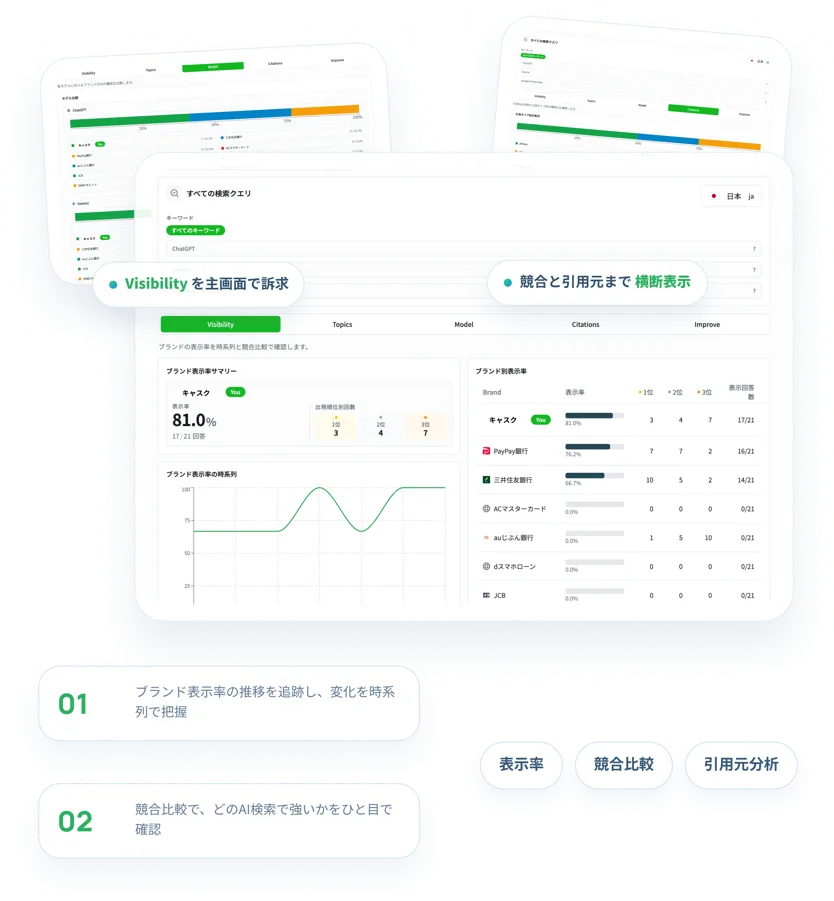
主要AIエンジンと連携

Platform Architecture
複数のAIエンジンとあなたのブランドの間に立ち、露出・引用・改善を一元管理します。
AI Engines
ChatGPT Gemini AI Overview キャスク Platform
LiveOutcomes
Analytics
各タブで「できること」と「価値」を明確化し、現状把握から改善実行までを短縮します。
自社ブランドがAI回答にどれだけ登場しているかを、時系列と競合比較で可視化します。
ブランド表示率の推移
ブランド表示率ランキング
価値訴求
競合と比べて、自社ブランドがどの月・どのモデルで見えているかが一目で分かります。
次のアクション
表示率が落ちたタイミングを特定し、次の改善対象を切り分けます。
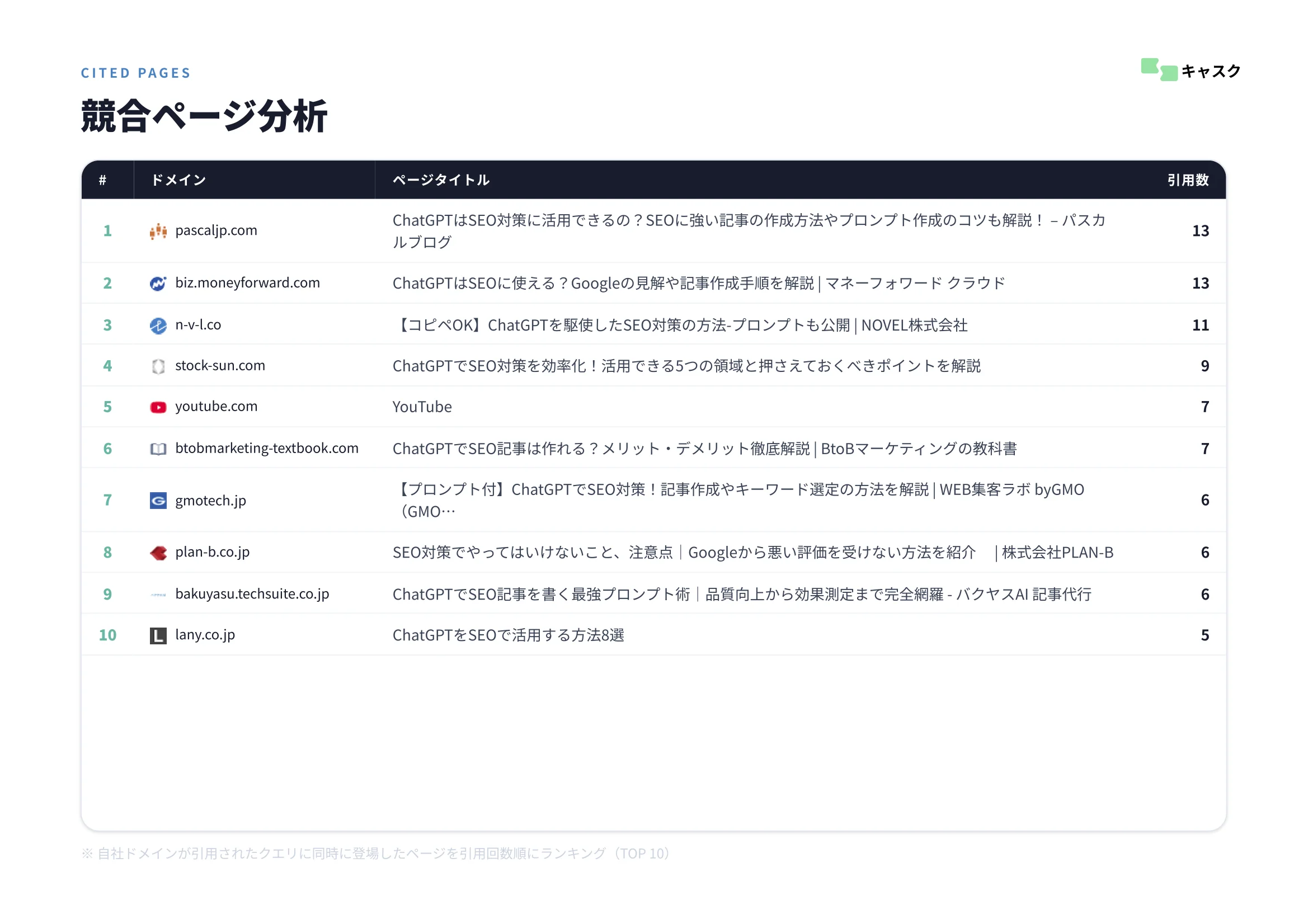
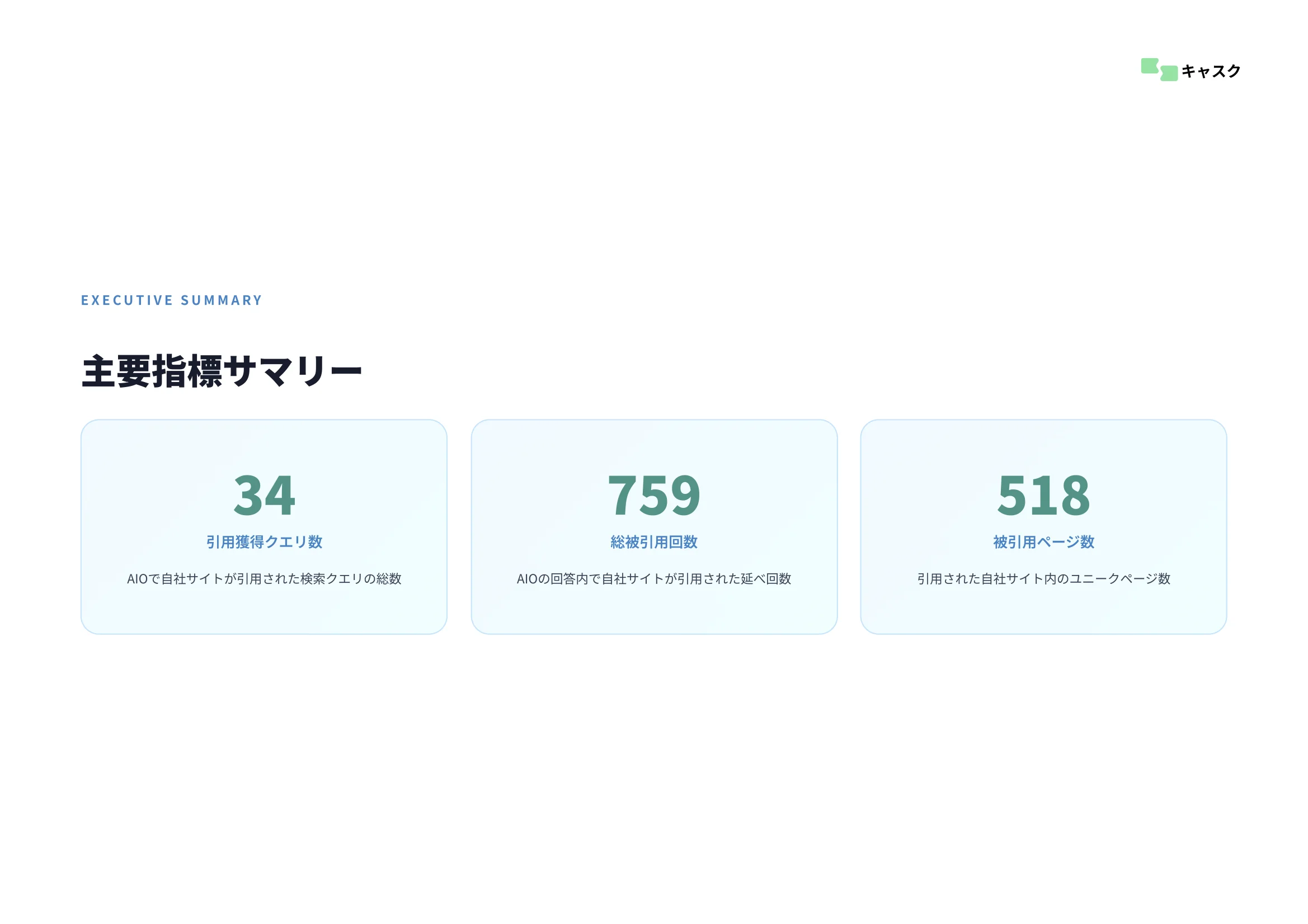
AI回答の引用元ドメイン・ページを集計し、自社・アフィリエイト・外部サイトの比率まで追えます。
引用タイプ別の割合
引用元ドメイン TOP
#1 mybrand.com
#2 affiliate-a.jp
#3 external.com
価値訴求
どのサイト・どのページが引用されているかを見れば、投資すべき媒体が明確になります。
次のアクション
自社ドメインと外部メディアの役割分担を見直し、引用を取りにいく先を決めます。
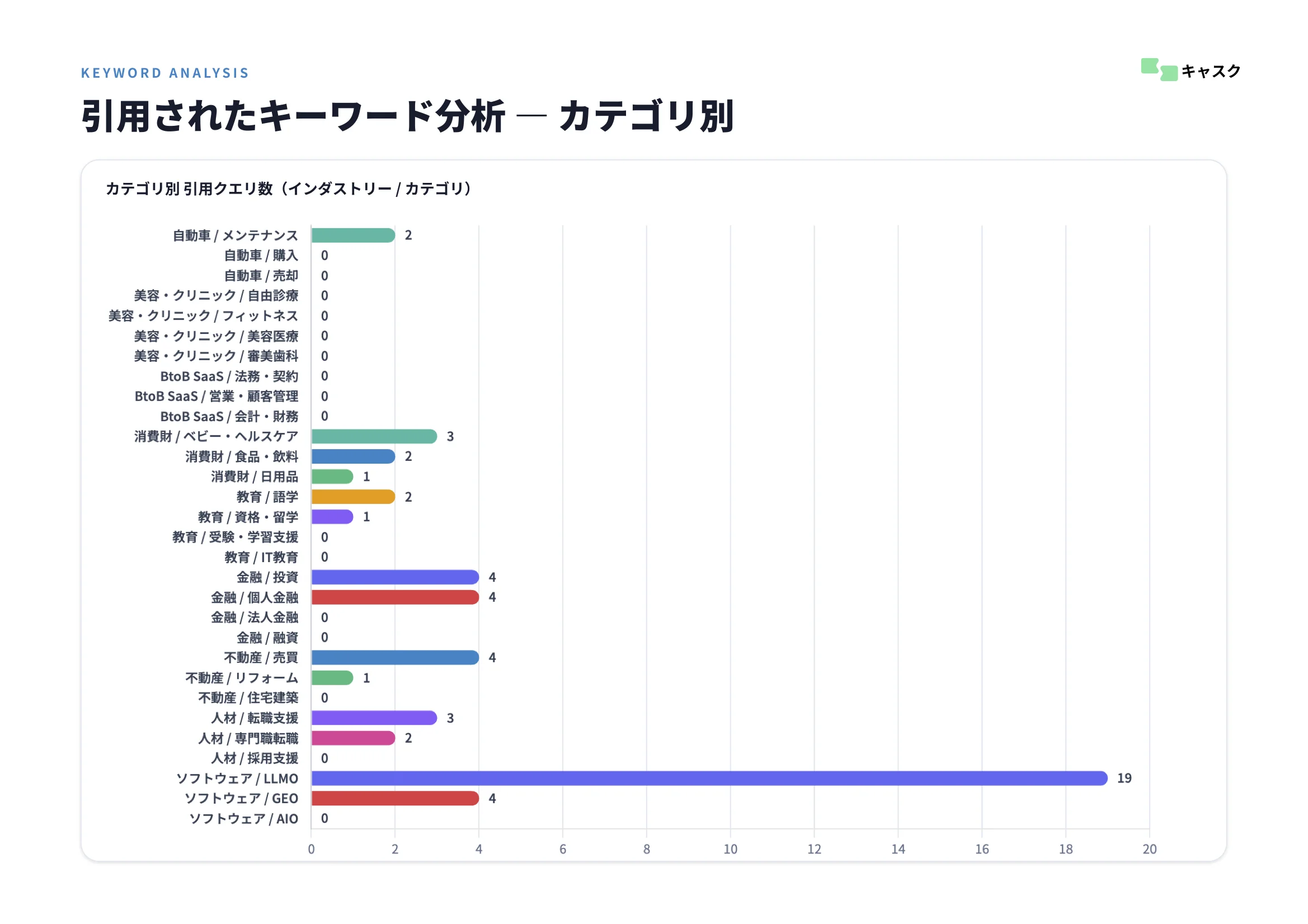
AIがブランドについて何を語っているかを、トピックとセンチメントで可視化します。
センチメント別ワードクラウド
センチメント集計
価値訴求
評判の強みと改善余地を、感覚ではなく実際のトピック分布で把握できます。
次のアクション
ネガティブ文脈の多い論点から優先して、FAQや比較表を補強します。
ChatGPT・Gemini・Google AI Overviewごとに、自社ブランドのShare of Voiceを比較します。
AIモデル別 Share of Voice
ChatGPT
ChatGPTは伸びしろあり
Gemini
Google AI Overviewで最も強い
Google AI Overview
Geminiで競合差が広がっている
モデル別の示唆
価値訴求
どのAIモデルで勝っていて、どこに伸びしろがあるかを即座に判断できます。
次のアクション
勝っているAIは守り、弱いAIは改善対象キューへ直結させます。
改善すべきページを優先度つきでキュー化し、AI回答の根拠まで原文レベルで確認できます。
改善優先ページ
戦略: 最優先強化ページ最優先強化ページ
施策見直し
コンテンツ底上げ
優先度低
改善キュー
「○○ おすすめ」
#サブクエリA
「△△ 比較」
#サブクエリB
「□□ 選び方」
#サブクエリC
エビデンスワークベンチ
AI回答テキスト
「この製品はコスパが優れており、初めてでも使いやすい構成です…」
引用マッチ
mybrand.com/review
スコア: 0.97 / ランキング: 1位 / このページを強化すれば引用増加が見込める
価値訴求
勘ではなく、影響力・リーチ・ポテンシャルのデータで改善順序を決められます。
次のアクション
改善キューから着手し、AIが引用した根拠ページを先に強化します。
最短で現状を診断し、優先施策までその場で確認できます。
Simulation
URLまたはHTMLを入力すると、AIが構造改善案を生成しBefore/Afterで差分を提示します。
FINAL SCORE
HTML取得から構造チェック、反復スコアリングまでを一つのフローで回し、改善後コンテンツをその場で確認できます。
コンテンツ改善パイプライン(4ステップ)
対象URLまたはHTMLを解析可能な形式へ正規化します。
狙う検索意図を複数のサブクエリへ分解します。
FAQ・見出し・表などの構造要素を評価します。
改善候補を反復評価し、最終案を提示します。
達成チェックリスト
How It Works
セットアップから改善効果の追跡まで、運用フローを標準化できます。
ブランド名とドメインを登録して監視対象を定義。
各AIモデルの回答内容と露出率を継続収集。
引用ドメイン/ページ、SEO順位、言及内容を深掘り。
優先度付きアクションを実装し、改善を反映。
Qask Pulseと各指標で改善インパクトを検証。
Before / After
AI検索の状況把握から改善実行までを、主観ではなくデータで回せる状態に変えます。
TEAM IMPACT
報告・改善・競合比較が同じダッシュボード上でつながるので、チームの意思決定が速くなります。
Market Context
AIがリンクではなく回答を返す時代に、ブランド可視性のルールが変わりました。
Key takeaway
従来のSEO指標だけでは、AI回答での露出率・引用元・競合比較を把握できません。
The Shift
The Problem
The Opportunity
ChatGPTやGeminiなどの生成AI検索では、ユーザーは検索結果ページを経由せず回答を取得します。
従来のSEO指標だけでは、AI回答での露出率・引用元・競合比較を把握できません。
先行して対応したブランドほど、AI回答内の認知優位を積み上げられます。
Key takeaway
ゼロクリック検索の時代に、ブランドが認知されるために。
Key takeaway
AI検索にもSearch Console+GA4の可視化分析基盤が必要
Key takeaway
早期に運用を始めるほど、可視性の複利が効く。
AIエンジンでのサイト評価を可視化し、競合を超えるための改善機会を発見しましょう。
分析できる項目:
1営業日以内にメールでお送りします
Blog
AI検索でのブランド可視性を高めるための戦略、分析、実務ノウハウをお届けします。
ChatGPTの回答に表示される広告を金融系50クエリ(NISA・資産運用・証券口座・クレジットカード)で調査。広告の表示率は72%で、カテゴリや質問の意図によって表示率に差がありました。広告と引用元の関係も分析します。
Profoundが200万件超のAI会話と閲覧行動を分析した「The AI mention effect」を紹介。AIによるブランド言及後のサイト訪問増加、媒体・業界別の差、従来の流入計測では見えにくい効果を解説します。
ミュンヘン地裁がGoogleのAI Overviewによる虚偽表示の差し止めを命令。AI回答を「Google自身のコンテンツ」と認定した初判断の意味と、ブランドが取るべき備えを解説します。
同一検索クエリのGoogle AI Overviewを約2.5か月にわたり定点観測。引用サイトがどれだけ入れ替わるのか、定番サイトと一過性サイトの違い、業界差をデータで解説します。
料金プラン
キャスクに関するよくあるご質問をまとめました。
AIO(AI Optimization)はSEOの次の進化形です。ChatGPTやGoogleのAI Overviewなど、生成AIシステムが回答を作る際にあなたのブランドを信頼できる情報源として引用しやすくするために、サイトやコンテンツを最適化します。
従来のSEOは検索エンジンのクローラーやランキングアルゴリズムを対象にします。一方AIOは、AIモデルが文脈・信頼性・ユーザー意図をどのように理解するかに焦点を当て、AIが理解・参照しやすい構造と表現を実現します。
AIが主導する検索が主流になると、ユーザーはサイトにアクセスせず生成AIから直接回答を得るようになります。AIOは、あなたのブランドがAIの回答で引用されることで、信頼性と可視性を維持できるようにします。
AIOでは、コンテンツ構造・メタデータ・意味的明瞭性を最適化し、AIが情報を正確に抽出・要約・引用できるようにします。これはSEOのベストプラクティスにAIモデル理解とエンティティ最適化を組み合わせた手法です。
マーケター、コンテンツ戦略担当者、ブランドオーナーなど、AI時代の検索環境で可視性と専門性を維持したい方に最適です。AIアシスタントにも認識されるブランド信頼性を構築できます。
キャスクは主要なAIエンジン(ChatGPT、Gemini、Claudeなど)に対して定期的にブランド関連のクエリを実行し、出力内容・引用元・センチメントを記録します。これにより、時系列での変化や競合との比較分析が可能です。
トラッキングデータに基づき、引用元サイトのコンテンツ改善、FAQ強化、公式ドキュメント更新など、AIに認識されやすくするための具体的なアクションを優先度付きで提案します。
初期のトラッキングデータは利用開始後すぐに確認できます。AIエンジンの出力改善は施策内容や規模によりますが、継続的なモニタリングにより効果測定と改善サイクルを回すことが可能です。
デモをリクエスト